Let go of what’s weighing you down
Talk with Sid for pointers rooted in ancient wisdom and practical guidance to release negative thoughts and emotions, and follow the ancient wisdom path of letting go.

Tap for expression · Hold to grow
Enter to send · Shift+Enter for a new line · Esc to leave. Sid is an AI companion, not a therapist.
Start with: “I'm feeling stuck” or “Guide me”
Sharing
Share your hidden side with the world, safely and anonymously. Wish a stranger well on their journey, or (but please don’t) send some memes.
Mental development for letting go of past negativity
Walk the same path again and again, and the connection grows stronger. That is how a new habit of mind is formed.
The path is mental development. (The word “meditation” is often used here, but “mental development” is the more accurate translation.) It works a lot like the neural pathways in your brain: the thoughts and reactions you repeat become well-worn grooves, and the more you follow them, the easier they are to follow again.
Some of those pathways don’t serve you: worry, resentment, self-blame, the constant wanting. Others do: kindness, honesty, patience, clarity. Walking the path means gradually abandoning the unhelpful ones and cultivating the helpful ones, for long-term happiness.
Neuroscience calls the underlying idea neuroplasticity: what you repeatedly practise tends to grow stronger. It’s an analogy, not a brain scan, but it explains why small, steady steps matter more than dramatic effort.
What letting go is
Letting go is an old path toward inner freedom. It is the ease that comes when you stop treating “my story,” “my pain” and “my identity” as the whole of who you are.
When you stop feeding the habit of holding on, the heart settles. What is left isn’t emptiness but clarity, calm and a quiet freedom that doesn’t depend on how things are going.
It isn’t passive
Letting go isn’t just watching your thoughts go by. That is a common misunderstanding.
It is an active practice. You build what is clear and kind, and you work at loosening three habits: craving, resistance and false identification.
Remembering...
So what do I let go of?
The old, automatic pathway of wanting, resisting and identifying. When a hard feeling comes up, the old pathway says: hold tighter, push it away, or become the story. Letting go is choosing another way: notice, allow, release the wanting, and rest.
The old pathway
The old pathway feels familiar. Fear, anger, craving or shame appears, and almost without noticing, we tighten around it. We feed it with thought, justify it, act it out or bury it. Three things drive the cycle: craving (I must have this, I must keep this), resistance (I must push this away, I must fight it) and false identification (this story is who I am).
Each time we follow the pathway, it gets stronger. Letting go interrupts it. You meet what is here without adding more grasping or resistance, and over time the old pathway fades from disuse and a freer way of being becomes natural.
Cultivating the helpful
Letting go is only half of the path. The other half is cultivating: deliberately practising kindness, honesty, patience and clarity until they become your easy, natural way of responding.
As the unhelpful pathways weaken and the helpful ones grow, happiness stops depending on circumstances. It becomes something you’ve trained, and it lasts.
It comes down to a choice
At the heart of the path is a choice: the inner decision to stop following the desires that bring dissatisfaction and unhappiness, and that pull you out of step with how things really are. Make that choice again and again, and that is the practice.
Remembering...
Nothing to gain
There is nothing to gain, nothing to attain, and no one more to become. The practice is to settle into what you already are, and to let go of the drive our culture instills to be something more: the belief that “I’m not good enough.” What remains is your natural ease.
Whatever you feel stuck on, let it go
The practice is simple to describe and deep in its effect. You don’t have to force change, argue with the feeling or wait until you understand everything. You only have to be willing to let go.
Whatever arises, whether fear, anger, grief, shame, the need to be right or the wish for control, can be met, felt and released. Each time, the grip of the small self loosens a little more.
Remembering...
Not meant to overwhelm
Practice shouldn’t overwhelm you. Go at a pace you can sustain. There will be times to commit more fully, and that is fine, but never at the cost of your wellbeing.
Go slowly. If anything feels overwhelming, stop, open your eyes and look around the room. If distress continues, please talk to a doctor, a therapist or someone you trust.
Remembering...
Where the real path begins
The path really begins when you can keep your commitment to living in line with what is true, whatever is happening around you. At first, outer conditions may bring maturity, stability and confidence. The real test is when that confidence is so settled that you no longer fear the outside world, because what you know to be true matters more than convention and worldly opinion.
Letting go: common questions
What is the path?
The path is mental development. It works like the neural pathways in your brain: the habits of thought and reaction you repeat get stronger. Walking the path means gradually abandoning the unhelpful pathways and cultivating the helpful ones, such as kindness, honesty and patience, for long-term happiness.
What is letting go?
Letting go is an old path toward inner freedom. It means loosening three habits: craving, resistance and false identification (treating “my story” or “my pain” as the whole of who you are). When you stop feeding the habit of holding on, the heart settles.
Is letting go the same as suppressing my feelings or giving up?
No. It isn’t suppression, and it isn’t just watching. You feel what is here, build what is clear and kind, and loosen the grip of craving, resistance and false identification.
What exactly am I letting go of?
The old, automatic pathway of wanting, resisting and identifying. When fear, anger, grief or shame arises, it says hold tighter, push away or become the story. Letting go is choosing a different way, again and again.
Is Sid free, and is it therapy?
Sid is a free AI companion and needs no sign-up. It offers wellness support, not therapy or medical advice. If you may be in danger, call your local emergency number or a crisis line right away.
How often should I practise letting go?
Little and often works best. Keep it gentle and steady, and renew the choice to let go whenever something arises. Some periods call for more commitment, and that is fine.
Working with the body
The same path, felt in the body. Tension can soften as the grip of craving, resistance and old stories relaxes.
Letting go can lighten the load in both body and mind. As the grip of a separate self loosens, tension can melt and fade, and both settle into the natural flow of things, at ease with what is.
The warm reds stand for tension held in the body: the residue of craving, resistance and old stories. As you let go, they cool into calm blues, and the body softens and breathes freely again.
Hey… I have a body!
As you sit quietly and step back from daily noise, you may start to notice your body, and then its tensions. They take many forms: shallow breathing, a heaviness in the chest, a clenched jaw, a feeling of distance from your own body, a tightness between the eyes, and so on.
How body work helps
Stress and old reactions aren’t held only in the mind. Many people feel them in the body too, as chronic tension, bracing, a tight chest, a locked jaw or a stomach that never fully settles.
Some trauma-informed approaches, such as Somatic Experiencing, are built on the idea that the body can hold on to the arousal of a threat, and that gently helping it complete its natural response can restore ease. This is a working theory, and research on it is still developing. Animals are often seen trembling or shaking after a scare, and some practitioners treat that as a model for how the body settles.
As letting go deepens and old patterns surface and pass, the body may begin to feel safer and relax on its own. Sometimes that looks calm and quiet. Sometimes it doesn’t: shaking, involuntary sounds or a sudden jolt can come up as the body unwinds. If that feels frightening or too much, stop, and consider working with a qualified trauma-informed therapist.
Body work gives all of this somewhere to go. Many people find that when tension moves through and out, the body feels freer and more at ease. It can be a valuable practice in its own right, alongside the rest of the path and professional care where needed.
Ways people move stuck energy
These are common ways people work with the body directly to release tension and encourage a freer flow of energy. Gentle, regular practice of even one of them is enough to begin.
Keep in mind: these practices can be intricate and take years to develop. Kriya Yoga, for example, is considered a path in itself. They are best learned from an experienced teacher, because learning online alone misses a lot of nuance. Stay open-minded, and find out what works for you by visiting a real centre, program or community.
Postures held with steady breath to release tension stored in particular areas of the body.
Structured practices such as Shambhavi Mahamudra Kriya, combining breath, focus and subtle movement. Best learned in person from a trained teacher.
A guided, lying-down practice that scans and relaxes the body into deep rest.
Deliberate breathing patterns used to calm the nervous system and release held tension. The Wim Hof Method is one well-known example. Go gently, never practise in water or while driving, and skip it if you are pregnant or have a heart or breathing condition without a doctor's advice.
Slow, repeated movements paired with breath, used to gather and circulate energy.
A slow, flowing movement art that softens tension while training balance and awareness.
Letting the body tremble or shake gently to help release built-up stress.
Free, expressive movement to release stored tension and emotion.
Stop suppressing what is real, starting with being honest with yourself. Holding back a truth takes energy; acknowledging it releases it.

Contact me
If you’d like to get in touch for a call, you can email me at mlgcostello1@gmail.com. I don’t present myself as a spiritual leader or authority figure, a counsellor, a therapist or anything like that.
All the best from me,
Cathal
Feedback
Tell me what is working, what isn’t, or what you’d like to see. You can stay anonymous or leave your name. Screenshots are welcome too. Your message comes straight to me.
Please don’t include private details or photos of other people. Feedback and any images are sent by email to the site owner and are not shown publicly. Sid is not monitored: if you are in crisis, please see the help lines at the bottom of the page.
Keep this free for others
I want to run AI models, so please help me cover the costs. It will be good for everyone. Your generosity is well received and used for the highest goodness I can do.
— Cathal (and any friends who are part of it)
App coming soon
Accounts coming soon: when I have access to other models with funding, Sid will do exactly the same thing, but the user will be able to use it as much as they want, with long-term memory and personalization.
We’re building a dedicated app to make daily practice easier: private, offline-friendly and free at its core.
- Sid on the go — the same gentle companion, in your pocket
- Path & body work — practices saved for when you need them
- Still free — no account needed for the essentials
Testers and supporters help it get built properly. If you’d like to help:
People who are looking at screens a lot: We live in a busy world full of distraction, its so easy to swipe and scroll and waste so much time. Friendly reminders of the essentials of the path out of unhappiness help you remember, reflect and let the core principles sink in, again and again so you can remember you are precious, your time is precious, your well being is precious.
Letting go is a well-trodden path. Sometimes it is taught at length, in carefully distinguished steps and factors, and sometimes as simple advice in parables. The essence is the same.
Insight in modern language: easy to digest, kind and straightforward. Some of the source teachings are around 2,600 years old, but nothing here asks you to adopt a religion or follow an authority, so you can go straight to what helps.
Gentle practice at your own pace. You don’t need to have it figured out. Begin where you are.

Sid
Kind but powerful answers -- Sid is prompted to stay away from bias and generalization and to pull from documents rooted in evidence based practices that serve the purpose of one thing: freedom and peace.
Sid is an AI letting go companion (not quite R2-D2 yet).
A general-purpose AI draws on everything and answers to everyone, so its replies tend to be broad, cautious and generic. Sid is different. The library he draws from, and the way he is prompted, were designed for one purpose: to be kind and straightforward on your path toward lasting happiness. The material was chosen to illustrate the core principles of letting go, and to remind you to be kind to yourself: not to judge yourself, and to accept all of yourself, which matters when you are starting the journey of freeing yourself from needless self-blame. His answers come from that material, not from whatever the internet happens to say or whatever is trending.
What Sid stands for
Kindness. He doesn’t judge or lecture you, or tell you what you should have done. He reminds you not to judge yourself either.
Honesty, in harmony with kindness. He is gentle, but he won’t flatter you or only tell you what you want to hear. The two belong together.
Staying on the path. When you drift into worry, stories or self-blame, he gently brings you back to what matters: letting go and finding freedom from unhappiness.
Time-tested teachings on letting go, and principles anyone can learn and use.
Guides rather than lectures. He asks gently, goes at your pace and points you back to your own practice.
He remembers your recent conversations on your own device, so you can pick up where you left off. Sign-up accounts may come later, so you can keep the same memory across devices.
How Sid works under the hood
Sid is a lightweight retrieval-augmented chat companion. The page itself is a single static file (plain HTML, CSS and JavaScript, no framework and no account system), and all of Sid’s intelligence lives behind one chat endpoint.
When you send a message, the browser posts your recent conversation to a Cloudflare AI Search project. That service retrieves the most relevant passages from a curated library of letting-go teachings, drawn from the Kruba Ajahns of the Buddha Dhamma and from figures not tied to any religion or tradition, such as J. Krishnamurti, U.G. Krishnamurti and Dr. David R. Hawkins, and hands them to a language model, which writes the reply. Because the answer is built from that library, it always sticks to the core principles, but it differs in how it presents them and in the language it uses with you, so that the essence of the message comes across.
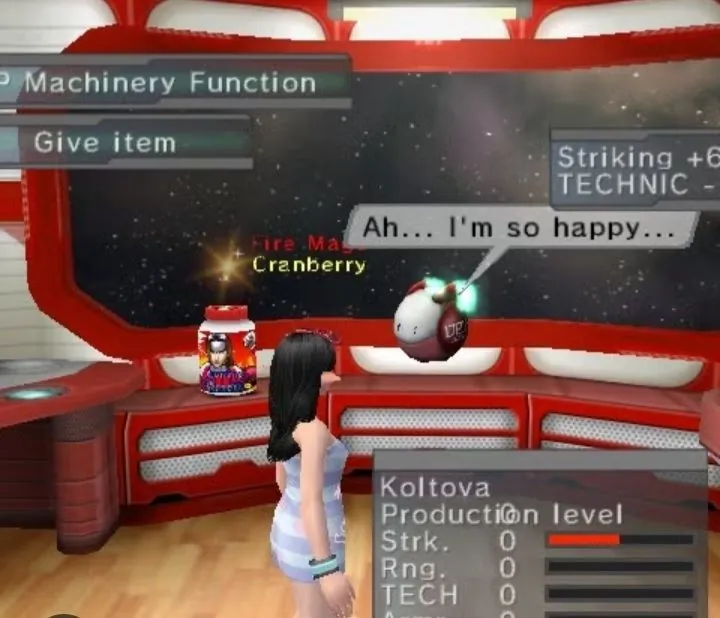
Sid’s look is inspired by the video game Phantasy Star Universe, where a small robot lives in your room and manages and takes care of so many things for you.
Thanks to Cloudflare backend…
Tone, format and behaviour are set in the AI Search project, not in this page, which sends no system prompt of its own. Updating the source material or the prompt changes Sid instantly, with no change to the site.
Each request carries only the last 12 messages of the conversation. A rolling copy of up to 40 messages is stored in your browser, which is how Sid “remembers”. Nothing is stored on a server, and “forget this conversation” erases it.
Replies arrive as a stream of server-sent events and are shown at a steady pace, so words appear as they are written. If streaming isn’t available, the full reply is shown at once. Requests time out after 20 seconds and retry once.
Before anything is sent, a keyword check looks for signs of crisis. If it matches, Sid skips the AI and replies with a helpline suited to your region, guessed from your browser language and time zone. It is a backstop, not a clinical screen, and can miss unusual phrasing.
No name, email or login is requested. Messages are sent to the AI service to write a reply and are not tied to an identity. Replies are formatted by a small renderer that escapes HTML first, so nothing in a reply can run as code.
Memory lives on one device and is lost if browser data is cleared. Like any language model, Sid can be wrong or miss nuance, and it cannot replace a real person. Accounts for syncing across devices are a likely future step.
Is it really free?
Yes. Everything is free. Donations are optional and simply keep it free for others.
Is this therapy?
No. It’s wellness support for relaxation and letting go, not medical care or a crisis service.
Are my chats private?
We don't ask for your name or an account. What you type is sent to an AI service so it can write a reply, and a copy of the conversation is kept only on your own device. Clear it any time with “forget this conversation”. Please avoid sharing names or identifying details.
What if I am in crisis?
If you may be in danger, call your local emergency number now. In Ireland, call Pieta on 1800 247 247 or Samaritans on 116 123. In the UK, call Samaritans on 116 123. In the US, call or text 988. Elsewhere, you can find a local helpline at findahelpline.com. You deserve live human support.
This is not therapy. Sid is an AI companion, not a therapist, not a doctor, and not a substitute for professional care. Nothing here is medical advice.
If you may be in danger or thinking of harming yourself, please reach out for live human support right away.
Crisis support by country: findahelpline.com — free, confidential helplines for every country. In Ireland, call Pieta on 1800 247 247 or Samaritans on 116 123. In the US, call or text 988. Elsewhere, use your local emergency number or the link above.